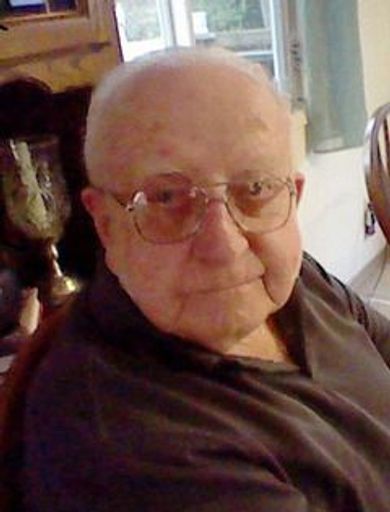
Donald Robert Schultz
May 18, 1920 — March 2, 2015
Don was raised on a farm in rural Wisconsin. After graduating from High School, Don decided he had enough of farming and enlisted in the Army Air Corp in 1939. He was sent to Selfridge Field in Michigan for Basic training. He was then put in a Base Flight Section, working with various trainers, bombers, and fighters. He was made an assistant crew chief on an A-17 attack bomber. In 1940 he was sent to Scott Field, Ill. for Air Mechanics Training and Instrument Specialist Training. After graduation Don joined a truck convoy headed to Baton Rouge, La. with the 58th Pursuit Group.
On December the 7th they were shocked by the news of the Japanese bombing at Pearl Harbor, followed by the US declaration of War. Don’s group was sent to Oakland, Calif. Jan. 1942 to await transportation. The trip to Australia took 21 days by troop ship. In May they boarded another ship to leave for Tonga and later New Caledonia. They had 25 P-40 Warhawks which were in crates of parts which they had to assemble, which they did in 17 days. Don was part of a group of 50 who were picked to go to Guadalcanal to maintain planes at Henderson Field. They arrived November 12th, 1942. They had not yet had time to dig foxholes when they retired for the night to their tents. The first naval battle began between Guadalcanal and nearby Savo Island. Eleven Japanese transports attempted to land 7,000 troops but were defeated. On the second night about 11 PM Don and his tent-mates were thrown out of their bunks by exploding shells landing all around them. They made it to the nearest hole about 100 yards away dodging shells all the way. They found out the following day that the 14 incher shells came from a disabled Japanese battleship that was just off shore that fired all of their ammo at the field before it was scuttled. 100 aircraft, 26 naval ships including 2 Japanese battleships, and about 3500 troops from both sides were lost in a series of battles over 4 days. The invasion had failed and proved to be one of the turning points of the war in the Pacific. When things slowed down, they patched up the damaged aircraft. The Japanese evacuated most of their troops from the island by February and Don and his crew were relieved by another crew from Fiji in April. After some R&R on Fiji Island, there was additional duty on Bougainville where their positions were shelled in March. In May they were shipped to New Guinea and Middleburg Island. Like many of these islands, Middleburg was just barely large enough for an airstrip.
In October Don received orders for the US on rotation policy, and arrived in San Francisco November 1944. For nearly a year Don spent time in California at Santa Ana, Lemoore, Santa Rosa, and March field. September 12th 1945 he went to Ft. Sheridan, Ill., then home and was discharged September 15. While in California he had met someone special and sent her a letter September 17th 2 days after he returned home to Wisconsin proposing marriage. They were married October 25th, 1945.
Don and his wife Phyllis owned several homes in Portland, most recently in Laurelhurst where they lived for 40 years. Their favorite activity was traveling in their RV all around Oregon, to southern California, Yellowstone and to Wisconsin by way of Canada. Their favorite destination was the Oregon Coast. They moved to Cherrywood Village November 2007 as their health limited their activities, and Phyllis passed away of cancer in April 2008. Don moved in November to a residential care facility in East Portland and passed away March 2, 2015. He appreciated the extra care and felt safe and respected. Many people remember Don as a kind man who will be missed.
Service Information
To order memorial trees or send flowers to the family in memory of Donald Robert Schultz, please visit our flower store.
Guestbook
Visits: 0
This site is protected by reCAPTCHA and the
Google Privacy Policy and Terms of Service apply.
Service map data © OpenStreetMap contributors